






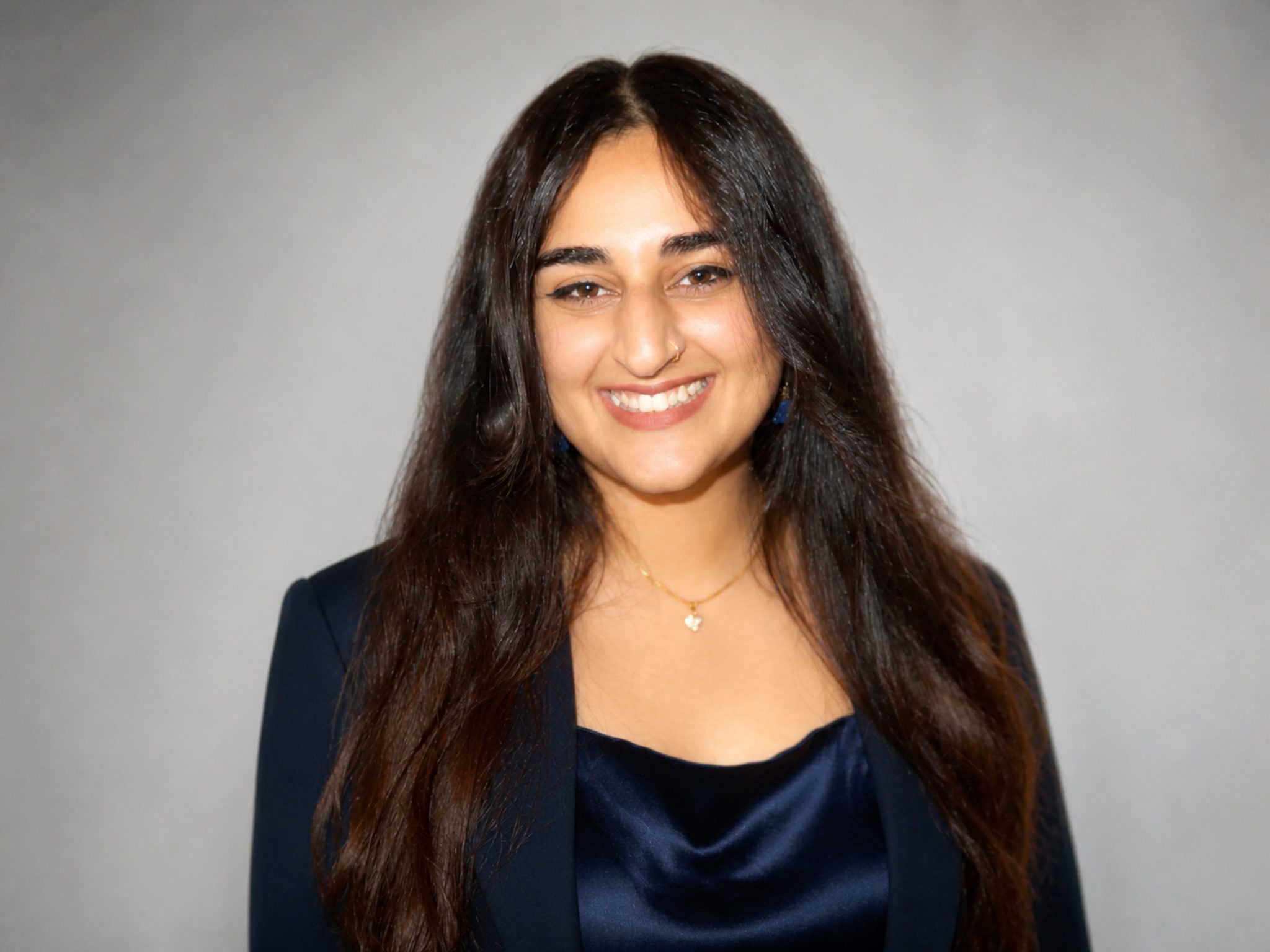
Successful technology design goes far beyond aesthetics. According to brand and visual designer Suman Modha, it’s all about how people experience, understand, and trust what you’ve created.
Suman has focused on improving digital experiences since she began her career as a part-time graphic designer at St. Cloud State University in 2018. During that time, she’s learned that good design can go a long way in making complex ideas feel simple, clear, and approachable.
Now a student in Wake Forest University School of Professional Studies’ AI Strategy & Innovation Program, Suman is building on her work with UI/UX design, branding, and product development to gain a deeper understanding of how artificial intelligence can support her unique approach to human-centered tech design.
For Suman, the goal is to build AI experiences that feel thoughtful and useful to the people who rely on them.
“I don’t just want to design around AI,” she said. “I want to understand how it works, how it’s applied, and how it influences decisions.”
In her studies, Suman has been able to connect her own background—both professionally and personally—with the rapidly developing world of AI. As Wake Forest SPS celebrates Asian American and Pacific Islander (AAPI) Heritage Month, her story reflects the value of bringing your lived experience into how you approach innovation and professional development.

A Life Shaped by Two Cultures
Originally from Gujarat, India, Suman’s parents immigrated to the United States before she was born. Though they eventually settled in California—where Suman grew up—they made sure India remained a strong presence in Suman’s life, both through culture at home and visits with family.
“We still travel back when we can, and those trips have always been really meaningful for me,” she said. “It’s a completely different pace and way of life, and it’s helped me stay connected to that side of my identity in a deeper way.”
Growing up between Indian and American cultures gave Suman early insight into what it means to adapt. At home, she experienced a strong sense of tradition and structure. Elsewhere, she interacted with an American culture that often emphasized independence and flexibility. She learned to move between those worlds, recognizing different ways of thinking and communicating, and seeing the value in all of them.
It’s easy to see how that gift for adaptation and different viewpoints has positively influenced her design work.
“When I’m creating something, I don’t assume there’s one ‘right’ way people will understand it,” Suman said. “I naturally think about how different people might interpret the same thing, whether it’s language, visuals, or tone.”
Emphasizing Humanity in an AI-Powered World
The human touch Suman brings to her work is especially important in a field like AI. As organizations explore how to apply this transformative new technology, she emphasizes the importance of first understanding the people and communities AI serves.
“Balancing Indian and American cultures has made me very aware that there’s no single ‘default’ user,” Suman said. “The way people communicate, process information, or build trust can vary a lot depending on their background.”
The takeaway? AI shouldn’t be one-size-fits all, but instead flexible enough to meet people where they are. Suman hopes to help shape AI systems that are more responsive to the many ways people communicate, interpret information, and make decisions. Those nuances can make all the difference in terms of tone and information presentation, she said.
Professionally, Suman also looks to one value she learned growing up: intentionality.
“In Indian culture, a lot of things are done with meaning behind them, whether it’s traditions, routines, or even small daily actions,” she said. “There’s a sense that not everything needs to be rushed or optimized.”
In the tech world, where results are often measured by speed and scale, that perspective matters. Suman believes AI can and should support thoughtful, human experiences—not replace them.
And that connects back to her strong sense of responsibility to others, to thinking beyond herself. As it relates to AI, that means asking not only what a particular technology can do, but who it affects and how it can be used with care.
Designing the Future
As Suman looks to the future of AI, there’s one thing she says she’ll never automate out of her life: the traditions that help keep her grounded.
“Even small routines or traditions feel meaningful because you’re choosing to slow down and be present in that moment,” she said.
Suman hopes to continue bringing that balance to her work and studies. For her, AI progress is impressive, but it means little unless it’s connected with humanity, cultural understanding, and intentional choices that bring it purpose.
“Technology shouldn’t just be about speed or convenience,” Suman said. “It should also support thoughtful experiences and real human connections.”
Learn more about the Master of AI Strategy & Innovation program today. Connect with Suman on LinkedIn.