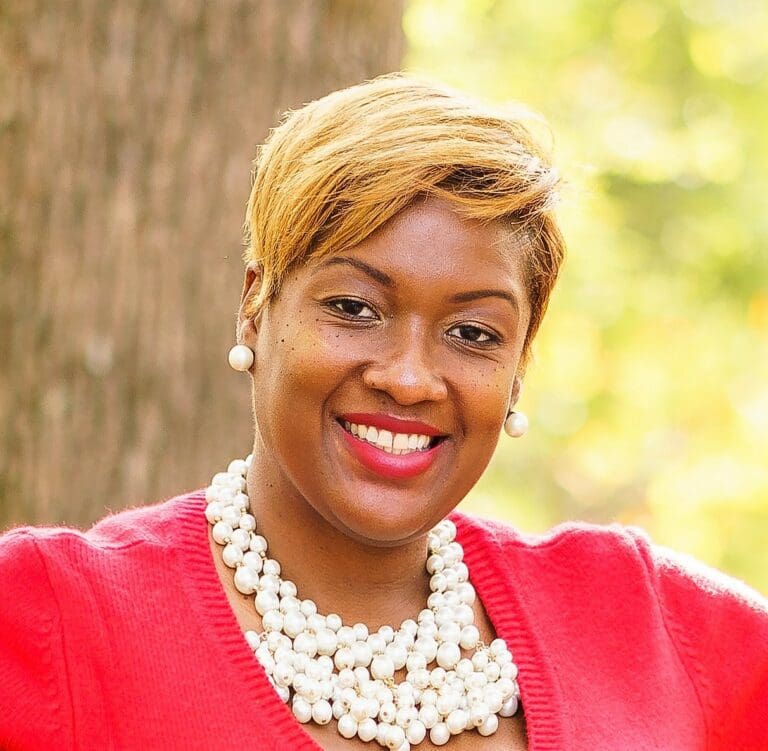







Dr. Anita Archambeau, AICP, DPA, loves shaping communities.
For more than 25 years, she’s brought this love to her work in the public sector and served in various capacities, including in city administration, land use planning, and community development. She holds a BA in Political Science and Community Studies from Saint Cloud State University and an MA in Urban Planning from Minnesota State University. In 2018, Anita earned her Doctorate of Public Administration from Hamline University.
“Public administration and planning aren’t necessarily the first occupations that come up in high school,” Anita recalled. “But I was fortunate to have a very influential professor in the community studies department who opened up my world to this path.”
That path led her to opening AME Consultatory Services LLC, a public sector consulting firm, in 2020. As a consultant, Anita has fostered and facilitated development projects for communities across the country, from Minnesota to Tennessee.
In addition to consulting, she now enjoys the opportunity to shape learning communities by teaching a variety of graduate and undergraduate courses in public administration, community development, and political science. She brought her experience to Wake Forest School of Professional Studies to help develop and teach the inaugural course for the new online Master of Public Administration (MPA) program last fall.
Anita has committed her life to helping communities and to helping build up the next generation of leaders in the public sector.
Here are four things she wants new and prospective students of the MPA program to know.
1. From Abstract to Reality
As part of the MPA program, Anita positions herself as a practitioner rather than an academic, and has since day one.
“I wanted to set the expectation that this class prioritizes real-world application over pure theory,” she said.
While she believes that theoretical frameworks are important for developing foundational knowledge, Anita wants students to understand the real-world challenges facing many public administrators.
“Over the years, I’ve seen many new hires who struggled to bridge the gap between textbook principles and reality,” she said.
This is a gap she believes an MPA program from Wake Forest SPS can bridge. In her course, “Foundations of Public Administration,” Anita focuses assignments and discussions on tangible public service experiences rather than remaining in the realm of abstract concepts.
2. Be Adaptable
Throughout her career in public administration, Anita dealt with a continuously revolving door of different political figures at the local, state, and federal level. This is one of the many reasons she encourages students to remain adaptable.
“That’s the reality of dealing with so many different stakeholders at all levels of government,” Anita said. “You have to learn how to adapt. It seems like a simple lesson, but it’s one that has to be reinforced.”
In the MPA program, class discussions emphasize adaptability and pragmatic problem-solving to help students understand that, while theoretical frameworks provide guidance, successful administrators must improvise often based on specific contexts and constraints.
“The curriculum also challenges students to work through real-world scenarios that require them to balance multiple stakeholder perspectives and craft solutions serving the public interest,” she said.
3. Prioritize Transparency
Service to the community is a key part of public administration work, and Anita wants her students to recognize that the best way to be accountable to that community is by being transparent.
“Transparency in the public sector is non-negotiable. It sets us apart from the private sector,” Anita explained.
According to Anita, transparency can:
- Build trust with the people you serve;
- Improve the public’s understanding of what government does;
- Promote participation in government processes and decision-making;
- Mitigate risks by addressing concerns and issues early on, before they escalate into larger problems;
- Create an environment of trust and open communication, which can lead to new ideas and approaches to solving problems.
To give students a better understanding of this, Anita brings in guest speakers, including city managers, finance directors, and public information officers. These practitioners share diverse perspectives on how public administration principles, including transparency, manifest across different contexts and jurisdictions.
4. Practice Inclusivity
Public administrators are called to serve all types of communities, including those who may lack resources or who have been previously underserved. This is where inclusivity becomes a priority.
“Inclusivity isn’t just a value,” Anita explained. “It’s a practice that must be woven into every decision and strategy in public administration.”
She notes that the MPA program helps to prepare students to practice ethical decision-making by actively addressing systemic barriers to equity and encouraging students to explore innovative approaches to expanding public service access, ensuring future leaders understand both the challenges and opportunities in making services more accessible to all community members.
The Future of Public Administrators
Anita’s dedication to shaping communities and future leaders exemplifies the profound impact public administrators can have.
“Serving in government is a profound privilege that comes with significant responsibility,” she said. “While some may view government work with uncertainty, I see it as a cherished duty entrusted to us by our fellow citizens. Each day brings opportunities to serve our community, to contribute to our neighborhoods’ wellbeing, and to help build lasting improvements that benefit everyone who lives here.”
Anita’s guidance illuminates how public service is not just a career; it’s a calling to create meaningful change.
Expand your understanding of public administration with an online Master of Public Administration degree from Wake Forest University’s School of Professional Studies (SPS). Learn more today.