





Brien Boswell is a Director of Global Strategy and Enterprise Platforms at Bank of America (BOA) and has more than 25 years of experience throughout his career coordinating and leading large-scale, complex change in the global financial services industry. In his current role, he demonstrates that project management is more than administrative tasks or checking boxes – it’s a highly valued executive skill, and it’s led him to a successful career at BOA.
“I’ve been at Bank of America for a total of 26 years and originally started in the marketing department,” Brien recalled. “I took a break to go to graduate school and shifted into the consulting space. I came back to BOA in 2014 and have since done a number of things across the bank between technology and enterprise program management.”
In 2022, Brien joined the Program Advisory Board (PAB) for the Master of Project Management program at Wake Forest University’s School of Professional Services. The PAB is made up of industry leaders and experts who ensure SPS programs remain impactful, accessible, and relevant. We sat down with Brien recently to discuss the real-world application of project management, his atypical days, and how he works within the organization he supports.
Meet Brien Boswell
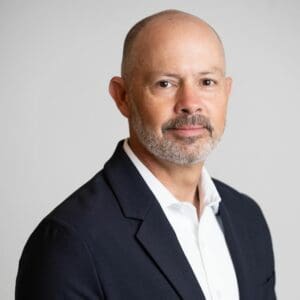
Current role / organization: Director of Global Strategy and Enterprise Platforms at Bank of America (BOA)
Location: Charlotte, North Carolina
Degrees earned: B.S. in Management Information Systems from the University of South Carolina; MBA from Wake Forest University.
Where you’ll find him outside of work: Engaging in the outdoors and serving on the Board of Directors at the U.S. National Whitewater Center.
Project Management in Action: Back to Basics
Wake Forest School of Professional Studies (SPS): What’s the view or approach you take to project management?
Brien Boswell (BB): People think there’s a secret sauce to project management. It’s not rocket science but a series of three simple factors: what’s the work, who’s going to do the work, and on what timeline. That’s the basis for project management.
SPS: Typically, what’s the first thing you do when you get to work for the day?
Brien Boswell (BB): That’s tough because I don’t really have a typical day. Most of the time it’s dictated by who’s looking for an update or what emergency needs to be solved for the day. But I would say that I try to start the day by taking an inventory of all the stakeholders. It’s a lot of checking email and taking a pulse for where things stand.
SPS: How do you typically end your day?
BB: Usually, I like to end my days by making a to-do list of what needs to be accomplished the rest of the week, especially what I need to dive into the next day. Occasionally, I’ll make some end-of-days calls to my team to make sure we’re on the same page on what needs to happen over the course of the next day or week.
SPS: In your role, what are some tasks you have to do every day to keep projects and programs moving forward and running smoothly?
BB: With a company our size and given the complexity and the number of stakeholders involved, I spend most of my time reinforcing those same three factors I mentioned earlier: What is the work? Who is accountable for doing that work? What is the timeline for completion? From there, it’s all issues and progress management.
SPS: What’s something you do on a daily basis that people might not associate with project management?
BB: I do a lot of flow charting because it comes in handy when you have to tell your story to senior executives who may or may not know how these processes work or how they connect. I try to put together visual references when we’re talking to the C-suite to ground them in the reality of what’s going on.
SPS: What are some of the major challenges you face in your current role?
BB: Three big ones come to mind. The first is ensuring that all the stakeholder groups are on the same page in terms of the execution plan, accountability, and risk management. A lot of people have the tendency to point the finger and say, “It’s not our fault. It’s their fault.” So a huge part of what I do is bringing people together to talk through the facts.
Another is managing priorities. At BOA, we have so much going on at any given time. Priorities can flip on a dime. We will often shut down an effort and go start another, so it’s also a challenge to stay on top of what’s the priority, what needs focus and attention, and where we need to apply the brakes.
Finally, managing funding is also a major challenge. The reality is that there are never enough dollars to do everything you want to do. So, you have to ask yourself, where are the compromises? What’s the scope that you can cut versus what’s the scope that you must do?
SPS: After more than 25 years in the field, what’s one of the biggest misconceptions people have about project management?
BB: People think, “Hey, if we get some good project managers, we’ll succeed.” They think it’s all administrative – that we come in and administer the project, and it’ll be a success. That’s not the case.
Where we run into issues is, “Do you have the subject matter expertise? Do you have capacity to actually execute on the work that we’re going to lay out, and do you understand your own processes?” A lot of times PMs get brought in to execute, but we end up first having to put some structure around the project or process.
SPS: What’s your go-to advice for new or aspiring project managers?
BB: One thing I like to stress is that the technical aspects and tools of project management are very important, but subject matter expertise can’t be substituted. When you’re on a project, you really have to make an effort and be intellectually curious. You have to understand the business that you’re there to transform or support.
The second is, don’t get too caught up in the tools, in the project plan, in the Gantt charts. Those are just your storyboard. It’s important to get back to the basics – the who, the what, the when. That will get you where you need to be.
Connect with Brien on LinkedIn.
Advance your career with an online Master of Project Management degree from Wake Forest University’s School of Professional Studies. Request more information today.