





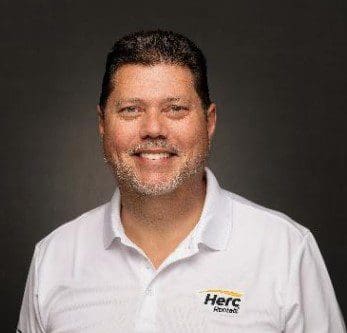
Jim Brant brings over 25 years experience to his current leadership role as Director of E3OS, Business Operating System at Herc Rentals. He’s worked for a number of large corporations, including JELD-WEN Holdings, Ingersoll Rand, Danaher, and Praxair. He approaches project management from a leadership perspective to ensure high quality outcomes that align with business strategic objectives.
“My role leading business transformation has been an evolution over the course of my career,” Jim said. “Originally, I began in the tech field as a mechanical engineer, but I became intrigued with the context of the broader business. In my current role, I leverage multiple disciplines including project management, change leadership, and operational excellence. Having such broad experience enhances my effectiveness as a leader allowing me to ‘connect-the-dots’ in a way that creates new insights moving the organization forward”.
In 2021, Jim joined the Program Advisory Board (PAB) for the Master of Project Management program at Wake Forest University’s School of Professional Services. The PAB is made up of industry leaders and experts who ensure SPS programs remain impactful, accessible, and relevant. We sat down with Jim recently to discuss the real-world application of project management, his atypical days, and how he works within the organization he supports.
 Meet Jim Brant
Current role / organization: Director, E3OS Business Operating System at Herc Rentals
Location: Bonita Springs, Florida
Degrees earned: B.S. in Mechanical Engineering from Clarkson University; MBA from Wake Forest University
Certifications: Project Management Professional (PMP)
What to know about him outside of work: He is an Army veteran and certified black belt
Project Management in Action: Leading Through Influence
Wake Forest School of Professional Studies (SPS): What’s the view or approach you take towards project management?
Jim Brant (JB): A key element to successful project management is leadership. Leadership speaks to the soft skills necessary to effectively influence an organization towards a common goal. Leadership repositions the value of the project management role to one of trusted advisors versus solely tactical execution – what I like to call the ‘Project Police’. I use this approach in how I build my teams, looking for team members to be leaders first and project managers second. Anyone can learn the tactics of project management, but to be successful, you must be able to influence others. By developing leadership qualities such as business and financial acumen, change management (influencing people), and truly understanding the challenges within the business significantly enhance your ability to successfully lead an organization through business transformation.
SPS: Typically, what’s the first thing you do when you get to work for the day?
JB: One of the first things that I do is review my emails to identify any urgent items that need immediate attention. I call them “P.O.D.s or Panics of the Day.” I look for high priority, business critical issues that need my immediate attention.
SPS: How do you typically end your day?
JB: I like to end with another review of the strategic priorities that I’m leading. I’m a visual person, I’ve got an action item list on the whiteboard in my office. I’ll review the list to determine if everything was completed that needed to be done and what new items popped up on the list that needed to be prioritized. This keeps me focused on the right things. I’m constantly evaluating that list and shuffling the deck depending on what the needs of the business are.
SPS: In your specific role, what are some daily tasks that you have to do to keep projects and programs moving forward and running smoothly?
JB: My job is all about balancing priorities while moving the organization forward. At the project level, it’s more about tactical management of project activities, tracking progress, and follow up on high risk items. It’s all a matter of evaluating what’s the highest priority and what needs to get done to keep the team moving forward. Within the business context, it’s about ensuring the project will deliver the business benefit outlined in the original business case. Effective leadership requires cross-functional engagement to ensure disparate teams are pulling in the same direction. What I call the “horizontal alignment” necessary to effectively activate an organization towards a common goal.
SPS: After more than 25 years in the field, what’s one of the biggest misconceptions people have about project management?
JB: There’s a perception that PMs are solely responsible for the tactical elements of a project. I’ve seen this in multiple organizations when using the term “project manager”. The term Project Manager often elicits a variety of perceptions of the role as a scheduler, notetaker, or the admin – which couldn’t be further from the truth. In reality, PM’s are trusted business partners who must effectively navigate the dynamics of an organization in order to achieve results.
SPS: What are some of the major challenges you face in your current role?
JB: Three key challenges come to mind. First, it’s a constant challenge to balance multiple priorities across a portfolio of projects to maximize value. The second is keeping the team moving forward. At the project level, that means looking not only at progress but also alignment with the project’s scope and objectives in delivering value to the business. Project teams operate in an environment that’s constantly competing for resources. Everyone’s busy, so you have to figure out how to maintain momentum within the greater context of the business.
The third challenge is sustainment of the project results. In a high pressure environment focused on delivering results, we must be deliberate to ensure the organizational capability exists to sustain results. If the project doesn’t consider long-term sustainment – which often gets missed – the ball will start to roll back down the hill because effective business management systems haven’t been installed.
SPS: What’s your go-to advice for new or upcoming project managers?
JB: I would encourage anyone involved with project management to continually work to increase their business acumen. The more you understand the business the more valuable you are to a project. Strong business background affords a PM credibility with your team and stakeholders. It also allows you to speak the language of business and connect dots for team members who might be too deep in the weeds. It’s also important to increase your financial acumen. You constantly have to evaluate things from a value perspective.
Finally, and I can’t overstate this enough, you have to increase your competency in change management which is all about considering the people impact of a project or program. It’s a key strategic lever to drive leadership alignment and team engagement. People forget that one. They’re busy out there trying to align the organization when their own team might not be aligned to drive the ball forward. Nothing happens without people, so the more you understand how they’re impacted by a change, the more we can get them to be participants in the change, instead of victims of it.
SPS: What have you enjoyed most about participating in the PAB at Wake Forest SPS?
JB: I think each of us on the board are passionate about Project Management as a strategic capability used to drive business forward. The opportunity to share experiences that others can benefit from is a rare occurrence. Being a PAB member affords the opportunity to help others, driving greater connection with the community. It’s an honor to support the effort to help working professionals in the program come out with skills and competencies that will serve them, and the companies they work with, in ways that create real value helping them succeed in their careers. At the Wake360 event last year, one of my favorite parts was talking with students and seeing it all come to life.
Advance your career with an online Master of Project Management degree program from Wake Forest University’s School of Professional Studies. Request more information today.