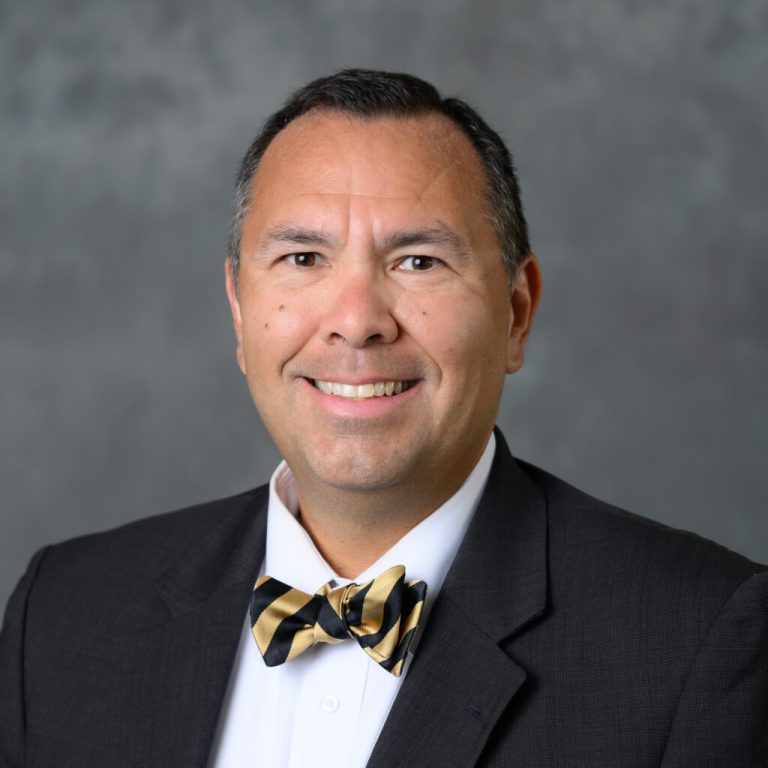
James Donnelly has spent more than 30 years in the business of protecting reputations.
As EVP of Issues and Crisis at M Booth, “J.D.” managed crises across industries and borders, counseled C-suites through moments of institutional reckoning, and watched the field transform in real time. He also brings that expertise to the Program Advisory Board for the Master of Communications program at Wake Forest School of Professional Studies (SPS).
His read on where things stand for communications today is clear: too many organizations are still playing reactive defense when they should be strategizing and planning ahead.
In a candid conversation with Wake Forest SPS, J.D. breaks down what it takes to get ahead of a crisis, navigate global communications, and use AI without losing human judgment.
The Era of Dark Noise
The communications landscape has changed over the past decade, but it hasn’t been one clean pivot. J.D. describes it as facing a “historic double-whammy.”
On one side, companies have gone through a relentless stream of societal shocks: a global pandemic, political upheaval, intense social movements, economic volatility, and the emerging disruption of AI. Simultaneously, most people in developed countries no longer trust the institutions they once relied on, according to the 2026 Edelman Trust Barometer and multiple other industry studies.
The result is what he calls the “Dark Noise Era”—a constant hum of turmoil with no off switch, and an audience that’s harder to reach and convince than ever before.
Most organizations have responded by going straight to war-room mode, and J.D. gets it.
“When everything feels urgent, you manage urgency. But staying in that mindset is where things go wrong,” he explains. “Remaining reactive-only is reputation survival mode and not recommended.” The antidote is holistic Corporate Affairs planning to help build, strengthen and protect reputation with a highly aligned C-suite, which is easier said than done and requires changes to how agencies organize to support this work. This evolution is happening right now at M Booth.
When a Crisis Hits
For organizations that are thrust in the middle of a crisis, J.D. outlines a consistent workflow, from intake and scoping through to longer-term trust restoration.
One step is make-or-break: analysis.
“A company may think it is managing a simple food recall,” he explains, “but a proper analysis may reveal that stakeholders have lost all trust in your approach, people, systems, and ongoing rigor to providing safe, quality food.”
That distinction between the surface wound and the underlying reputational cause is what determines whether an organization fully recovers from a crisis or barely survives. Proper diagnosis takes planning, training, and experience to execute properly.
This is where J.D. sees a real problem.
Demand for crisis counseling has gone up, but investment in crisis planning, training, and proactive issues management has ebbed. For him, that’s a dangerous trade-off. It leaves organizations more vulnerable over time, and it cuts the next generation of crisis professionals off from the foundational skills they need to develop.
Global Crises Need Local Trust
J.D. says there’s no universal playbook for global crises since every organization and market is structured differently.
“For instance, some multinationals maintain distinct brand identities per market, while others prefer global uniformity and a carbon-copy approach in each market,” J.D. says.
His team advocates for a “freedom within a framework.” This means leadership sets the overarching goals and strategy, then regional teams handle the messaging, tone, and spokespeople to fit their market.
He says in a global crisis, cultural authenticity is how you keep people’s trust. Locally, regionally, and consistent with the whole enterprise’s cultural center.
The Promise and Peril of AI
J.D. sees the value of AI. His team uses it to sharpen their work for clients, and he’s genuinely excited about what it can do when it’s applied thoughtfully. But he’s also watching AI adoption with some concern.
“There’s a lot of stomping on the AI gas pedal and too little hovering over the AI brakes,” he says.
Recent data backs him up. The number of major US companies flagging AI as a material business risk jumped from 12% to 72% in just two years, with reputational risk at the top of the list of concerns, according to a Conference Board analysis of S&P 500 filings.
J.D. points to other technological leaps that moved faster than the guardrails around them, like the boiler explosions of the Industrial Revolution and the flash-crashes of algorithmic trading. He thinks AI is heading toward a similar moment.
“Sadly, I think an algorithmic-driven major crisis seems inevitable in the next few years,” he says.
His team’s approach is to keep humans in the driver’s seat. AI assists the experts, but it doesn’t replace the judgment that comes from experience.
What the Best Communicators Get Right
The most underrated skill in crisis communications? According to J.D., it’s knowing how and when to ask the right questions.
“Our field tends to over-fixate on messaging,” he says. “Effective goal-setting and defining problems require asking the right questions to uncover the heart of a challenge, a solution, and any impediments along the way.”
An even bigger concern for J.D. is that communications is drifting away from its role in guiding principled leadership. Institutions are avoiding hard moments rather than facing them honestly and earnestly.
But his optimism is rooted in what drew him to the work 30 years ago: the field keeps changing, and that requires communicators to keep growing.
“The core foundations of crisis and reputation management remain constant,” he says. “How they are applied changes with each new challenge. That’s the fun and exciting part about this career.”
That adaptability, he argues, is the most valuable skill a communications professional can develop right now.
Connect with J.D. on Linkedin.
Take the next step in your career and learn more about the Master of Communications Program at Wake Forest University School of Professional Studies. Request information today.